
A 66-year-old woman with hypertension and systemic lupus erythematosus presented with intermittent interscapular and chest pain, progressive dyspnea and presyncope episodes since the previous week. On physical examination she was hemodynamically stable, but jugular venous distension and diminished cardiac sounds were detected. Transthoracic echocardiography showed a pseudoaneurysm of the ascending aorta (Figure 1A, arrow) with an adjacent large mass compressing the right cardiac chambers (Figure 1B, arrow). Thoracic computed tomography confirmed aortic rupture (contrast extravasation suggestive of active rupture; Figure 1C, arrowed circle) associated with a large intramural hematoma (dimensions: 100×87×104mm) extending inferiorly and compressing the right cardiac chambers (Figures 1D and E, arrow). Urgent surgery was performed with graft replacement of the ascending aorta. The ascending aorta was dilated and dissected with a large intramural hematoma of the anterior wall (Figures 1F and G). Distal to the left and right coronary sinus commissure, an aortic rupture approximately 2cm in extent was found (Figure 1H, arrow). The surgical procedure was technically successful, but the patient had an unfavorable postoperative course due to anoxic encephalopathy sequelae. After a prolonged hospital stay she was discharged without significant improvement in neurological status. This case describes an unusual subacute evolution of type A aortic dissection and highlights the importance of early recognition and treatment of this disorder.
Conflicts of interest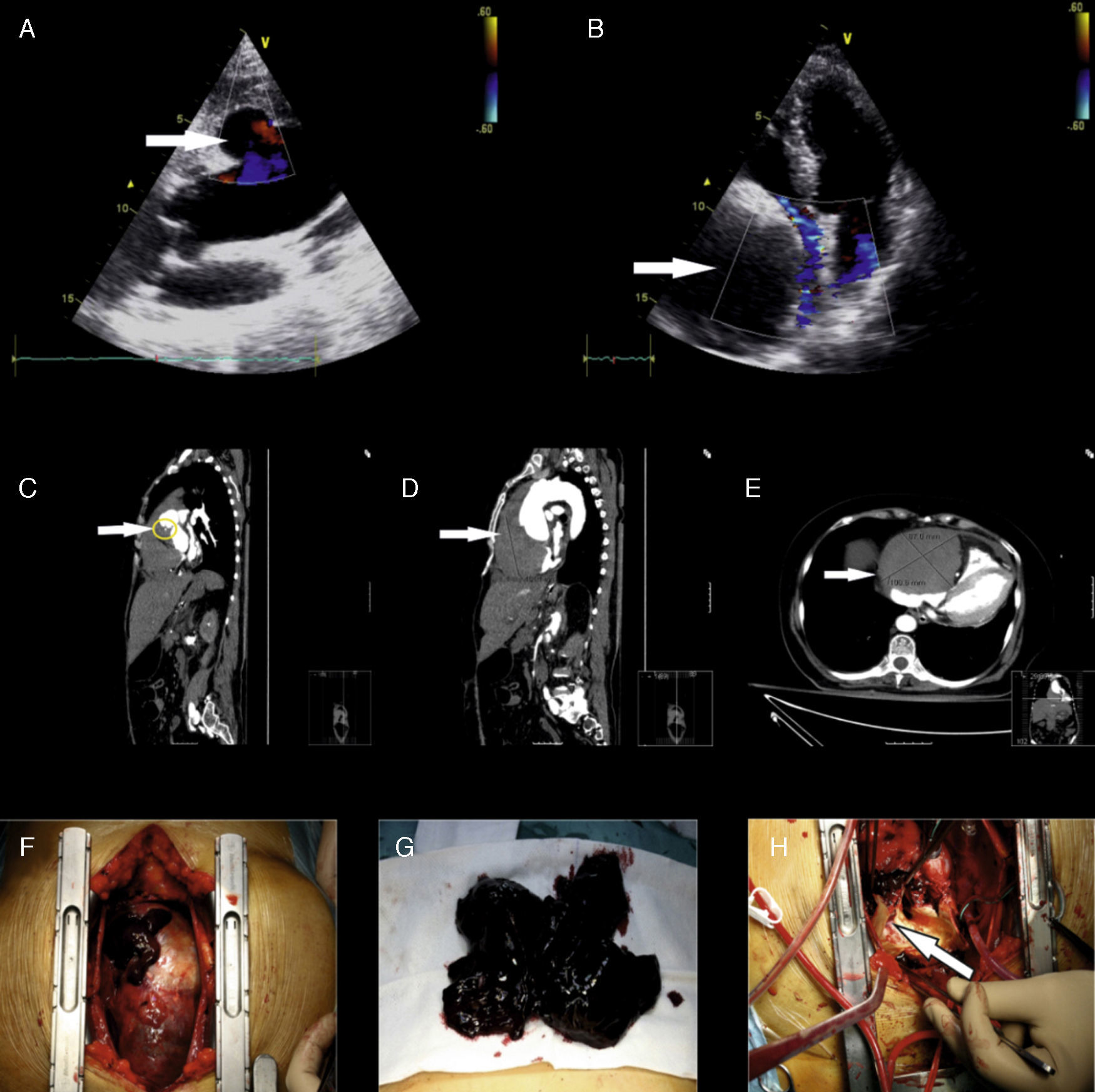
The authors have no conflicts of interest to declare.