
We present data from the national registry of implantable cardiac devices (CIED) promoted by the Portuguese Association of Pacing and Electrophysiology for the years 2021 and 2022.
MethodsThis is an annual, voluntary, multicenter registry with retrospective data collection. The evolution of interventions over time and the distribution by type of device are evaluated.
ResultsThe overall trend has been one of growth in previous years and during the biennium, with an increase in the total number of interventions across all CIED types. The only exception was cardiac resynchronization therapy associated with defibrillation capacity, which saw a decrease from 2021 to 2022.
ConclusionsFollowing a period of stagnation in the years leading up to this report, possibly due to COVID-19, there was a significant increase in procedures in the years under review. This growth highlights the vitality of the sector in Portugal and its strong position within Europe. This registry allows for the monitoring of the situation of Portuguese centers in relation to CIED procedures and their evolution.
Apresentam-se os dados referentes ao registo nacional de dispositivos cardíacos implantáveis, promovido pela Associação Portuguesa de Arritmologia, Pacing e Eletrofisiologia (APAPE) relativos aos anos de 2021 e 2022.
MétodosÉ um registo anual, voluntário, multicêntrico, com colheita retrospetiva dos dados. Avalia-se a evolução temporal das intervenções e a distribuição por tipo de dispositivo.
ResultadosA tendência geral tem sido de crescimento, quer relativamente a anos prévios, quer no biénio, tendo-se verificado um aumento do número global de intervenções em todos os tipos de dispositivos, excetuando na terapia de ressincronização associada a capacidade de desfibrilhação (CRTD), na qual ocorreu uma diminuição de 2021 para 2022.
ConclusõesApós um período de estagnação nos anos imediatamente anteriores aos aqui reportados, para o qual possivelmente a COVID-19 poderá ter contribuído, registou-se um aumento significativo de procedimentos nos anos em análise, o que demonstra a vitalidade do sector em Portugal e o seu bom posicionamento europeu. Este registo permite monitorizar a realidade portuguesa da implantação de dispositivos cardíacos eletrónicos implantáveis e a sua evolução.

The National Registry of cardiac implantable electronic devices (CIED) was set up and has been maintained by the Portuguese Association of Arrhythmology, Pacing and Electrophysiology (APAPE) since its founding in 1999. It provides an overview of national trends in the number and type of CIED implanted.
ObjectivesThe information we publish reflects the national and regional situation and can, therefore, assist political decision-makers in adapting their actions to current circumstances, both in terms of training professionals and the economic investment required.
MethodsThe registry is annual, multicenter, and voluntary, and data are collected retrospectively.
In the two years under review, a new online platform was used to make data collection and processing easier. Once fully implemented, it will give participating centers better and easier access to their own data and to the country's data.
The questionnaire available on the platform is similar to the one that was previously sent to each center. To comply with current data protection requirements, each center manager was required to verify their identity during the registration process on the platform. The data collected includes the total number of procedures categorized by the type of device implanted.
Although the sample covers the last two years, we also examined the trend in the total number of interventions, implantations, and replacements over the past decade.
The series categorizes therapies into conventional bradycardia pacemakers, cardiac resynchronization therapy with a pacemaker (CRT-P), implantable cardioverter-defibrillators (ICD), and cardiac resynchronization therapy with defibrillation (CRT-D).
The statistics for the implantation of leadless systems and subcutaneous cardio-defibrillators are also provided.
The data are presented as frequency graphs organized by year and/or implantation center.
ResultsThe number of centers submitting their data was the highest since the registry began. In 2021, 49 centers participated, while in 2022, the number decreased to 48.
Over the past decade, there has been a significant increase in the number of interventions in Portugal, largely attributed to a rise in implant procedures. In 2022, a total of 16845 procedures were performed, including 13318 implantations and 3527 replacements. It is important to note that this increase in the number of implantations comes after three years (2018–2020) marked by stagnant growth and even a slight decline in numbers.
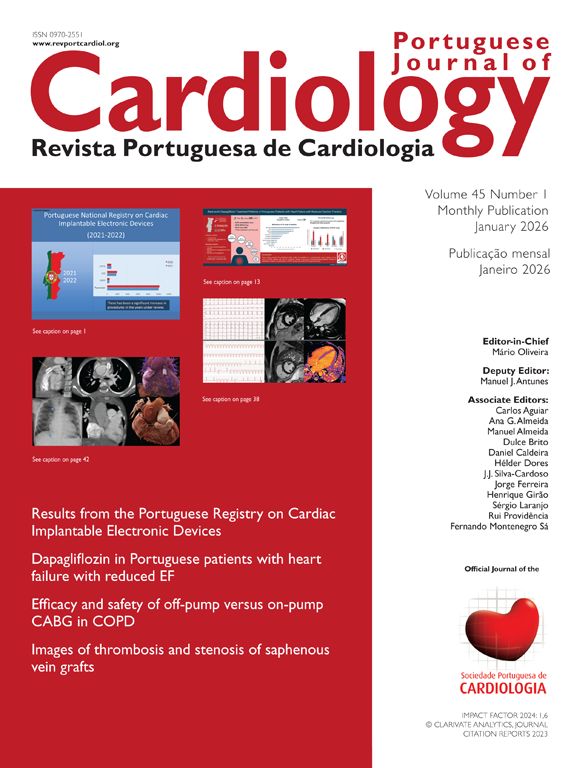
Figure 1 illustrates the annual trend over the past decade.

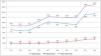
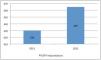
The total number of conventional pacing system implantations for the years 2021 and 2022 is illustrated in Figure 2.

The total number of pacemaker implantations increased by 1.66% in 2022 compared to 2021.
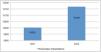
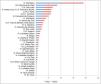
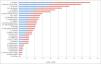
Figure 3 shows the number of cases at the different centers.

Dual-chamber pacing accounted for around two thirds of implantations, and single-chamber pacing (VVI) for approximately one third.
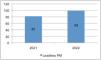
There was also an increase of 20% in leadless system implantations, as shown in Figure 4.
Cardiac resynchronization therapy with a pacemaker
Figure 5 shows that there has also been a relative increase of 8% in resynchronization systems from 2021 to 2022.

Figure 6 shows the distribution of implantations by center.
Implantable cardioverter-defibrillators
As shown in Figure 7, the number of ICD systems also increased 8% from 2021 to 2022.

Figure 8 shows the number of cases per ICD system implantation center.

Figure 9 shows that the number of subcutaneous ICDs implanted increased by 20% between 2021 and 2022.
Cardiac resynchronisation therapy/defibrillation devices
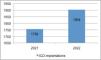
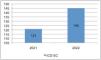
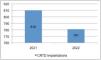
The number of CRTD system implantations deviated from the overall upward trend, experiencing a decline of approximately 3.5%, as shown in Figure 10.

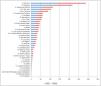
Figure 11 shows the number of cases per CRTD system implantation center.

As there were no data for 2021, in 2022, it was found that approximately one third of implanting centers performed pacing of the conduction system (either the left bundle branch or His bundle).
In 2022, we also surveyed which centers offered home monitoring. This monitoring is slightly higher for ICDs (65%) compared to conventional pacing or CRT (62%).
DiscussionThere was a general upward trend, both in previous years and in these two years, with an increase in the overall number of interventions in all types of devices, except for resynchronization therapy associated with defibrillation capacity (CRTD), where there was a decrease from 2021 to 2022.
When comparing Portugal's data to the European context, the number of pacemaker implants reached 974 per million inhabitants in 2022. In contrast, the median number of pacemaker implants across all member countries of the European Society of Cardiology was 607.3 per million inhabitants, with an interquartile range of 251.7 to 874.0.
In terms of cardioverter-defibrillators, a median of 121.1 ICD implants per million inhabitants was reported across ESC member countries (IQR 76.4–160.3). In contrast, Portugal's implantation rate reached 182 per million inhabitants in 2022.
In 2022, Portugal implanted 119 CRT systems (CRTP/CRTD) per million inhabitants, significantly exceeding the European median of 81.2 (IQR 30.5–116.4) CRT implants per million inhabitants in ESC member countries.
However, we need to keep in mind that this comparison with the median may be somewhat misleading, as there is a stratification based on national income levels. Compared to high-income ESC member countries,1 middle-income countries had a lower average number of procedures per million people, a difference that becomes more pronounced when considering ICD and CRT procedures.
ConclusionsFollowing a period of stagnation in the years immediately preceding those reported here, which may have been caused by the smaller number of participating centers (38 in 2018, 39 in 2019 and 2020) and possibly by the impact of the pandemic,2 there has been a significant increase in procedures in the years under review. This demonstrates the vitality of the sector in Portugal and its good position in Europe.
The centers are distributed across the country, and while the public sector remains the largest, the private sector is also clearly on the rise.
Finally, we want to emphasize the importance of this register, as it enables us to monitor the realities of Portugal and track their evolution.
Ethical approvalThis is the Portuguese National Registry on cardiac implantable electronic devices. It is a retrospective study that does not involve experiments.
Conflicts of interestThe authors have no conflicts of interest to declare.
The authors would like to thank the heads of all the centers and the colleagues they appointed who contributed the data presented in this article.