
Informação da revista
Vol. 37. Núm. 11.
Páginas 949-950 (Novembro 2018)
Vol. 37. Núm. 11.
Páginas 949-950 (Novembro 2018)
Image in Cardiology
Open Access
Complex congenital heart disease with absent pulmonary arteries
Cardiopatia congénita complexa com ausência de artérias pulmonares
Visitas
4157
Jorge Abreu-Ferreiraa,
Autor para correspondência
jorgeabreuferreira@gmail.com

Corresponding author.
, Sandra Pereirab, João Sarmentoc, Sofia Granjaa, António J. Madureirad, Maria João Baptistac
a Serviço de Pediatria, Centro Hospitalar de Trás-os-Montes e Alto Douro, Vila Real, Portugal
b Serviço de Pediatria, Hospital Pediátrico Integrado, Centro Hospitalar de São João, Porto, Portugal
c Serviço de Cardiologia Pediátrica, Hospital Pediátrico Integrado, Centro Hospitalar de São João, Porto, Portugal
d Serviço de Radiologia, Centro Hospitalar de São João, Porto, Portugal
Este item recebeu

Under a Creative Commons license
Informação do artigo
Texto Completo
Baixar PDF
Estatísticas
Figuras (3)
Mostrar maisMostrar menos
Texto Completo

A six-year-old girl, native of Guinea-Bissau, with a history of dyspnea on minimal exertion, recurrent respiratory infections and poor weight gain, was admitted to a reference center due to suspected tetralogy of Fallot with a view to possible surgery. Physical examination revealed central cyanosis with digital clubbing; oxygen saturation was 30–50% on pulse oximetry and pulmonary auscultation showed no murmur and normal pulses.

The echocardiogram revealed complex cyanotic heart disease including transposition of the great arteries (TGA), pulmonary atresia, a large interventricular communication and systemic-pulmonary collateral arteries. No pulmonary arteries were visible but there was a persistent left superior vena cava with dilated coronary sinus (Figure 1).
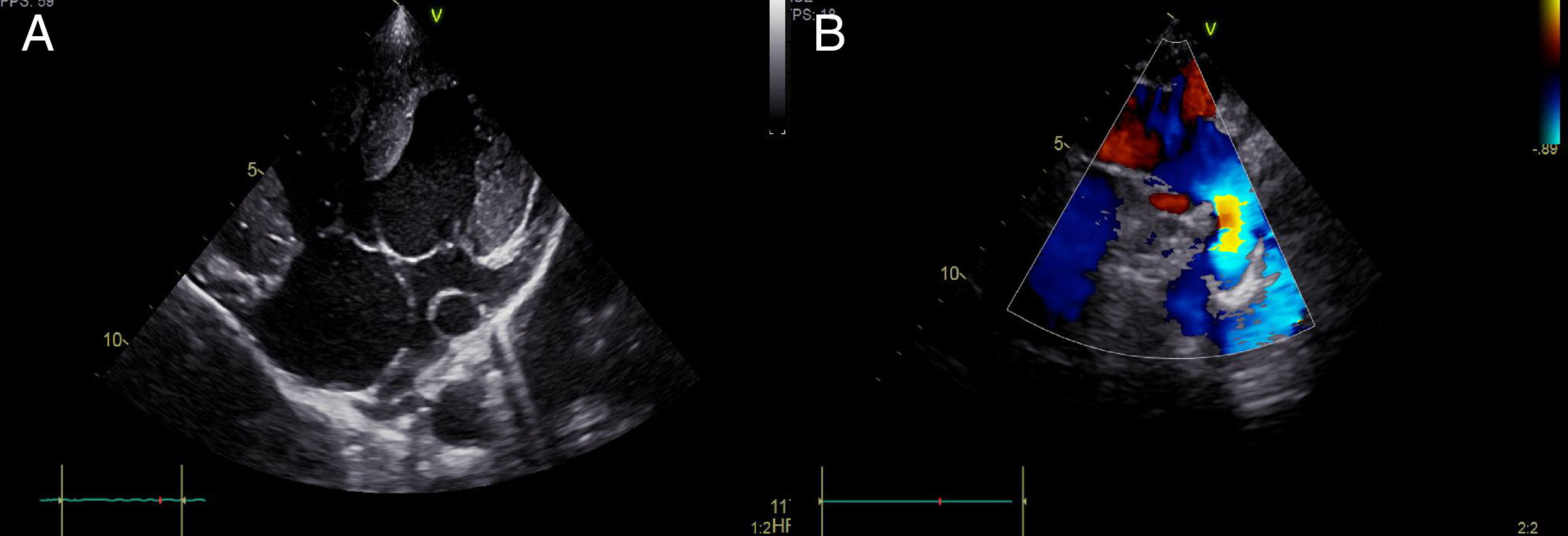
Figure 1.

Echocardiogram. (A) Four-chamber view showing a large interventricular communication and severely dilated coronary sinus; (B) aortic arch, showing the origin of two major aortopulmonary collateral arteries.

Cardiac catheterization confirmed the existence of collaterals originating from the supra-aortic trunks, the absence of central pulmonary arteries, and left juxtaposition of the atrial appendages (Figure 2). Computed tomography angiography revealed three major aortopulmonary collateral arteries (MAPCAs), one of which originated from the upper portion of the aortic arch, with severe stenosis at its origin and dilatation more proximally. It also showed absence of the pulmonary arteries, a 25-mm interventricular communication, and normal drainage of the pulmonary veins into the left atrium (Figure 3).
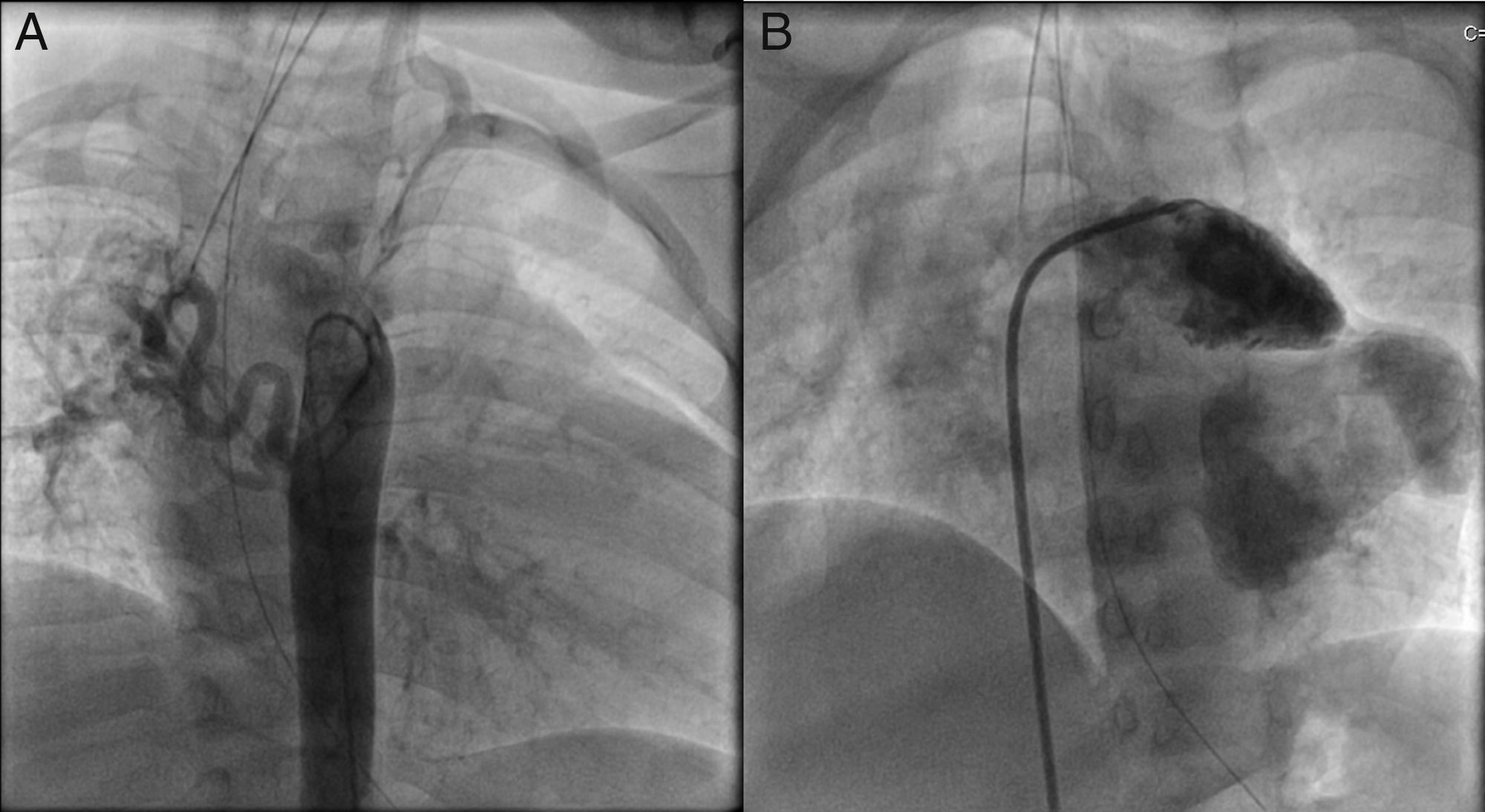
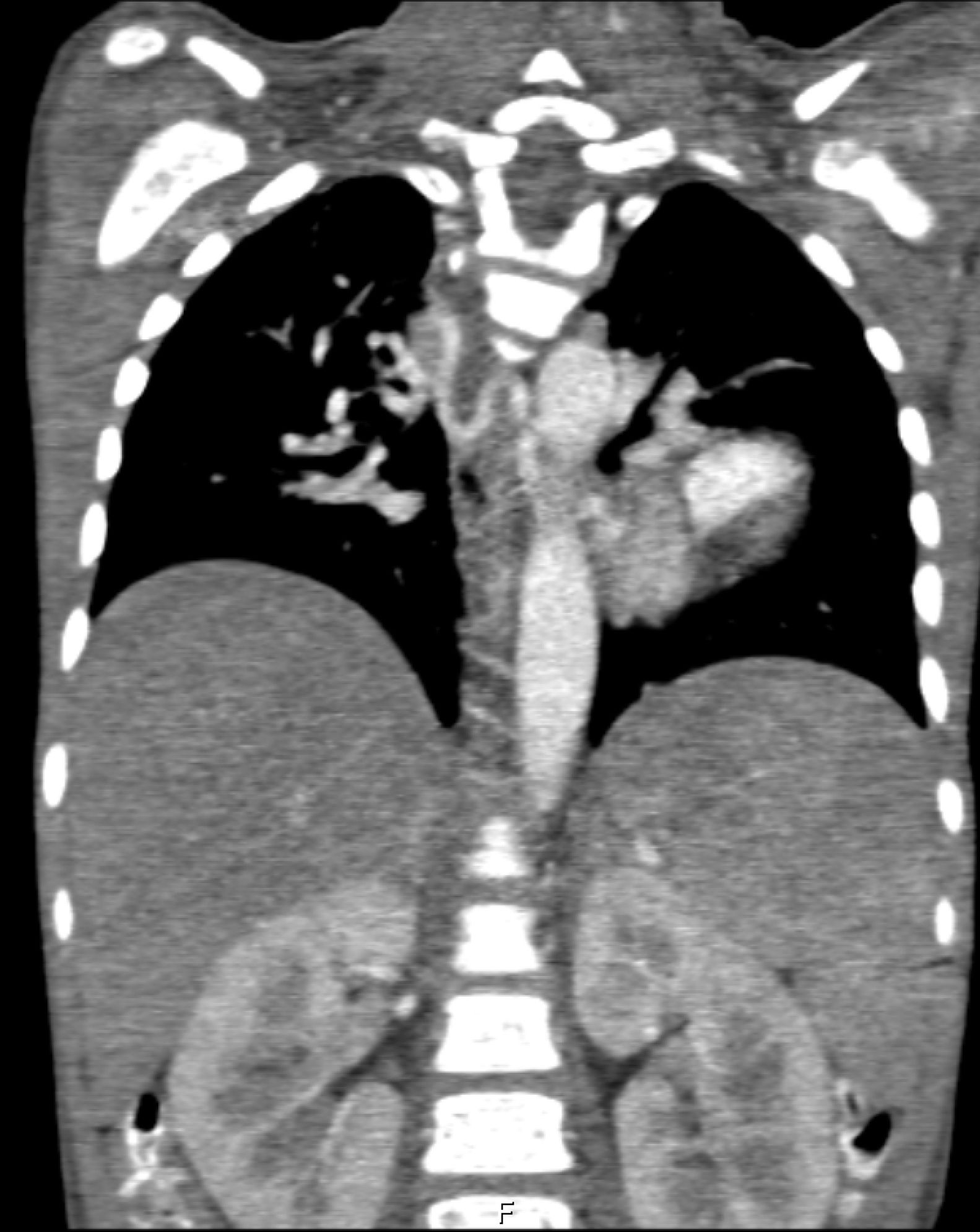
Figure 2.

Cardiac angiography. (A) Emergence of a large and slightly tortuous major aortopulmonary collateral artery; (B) left juxtaposition of the atrial appendages.

Figure 3.

Computed tomography angiography showing a large major aortopulmonary collateral artery with stenosis of its proximal portion.

The authors present a rare case of complex heart disease, diagnosed late, which remains a common problem in less developed countries. The presence of MAPCAs allowed the patient to survive, but their natural evolution to stenosis led to progressive worsening of the patient's condition.

Surgical repair in this case will depend on unifocalization of the MAPCAs, which will be a highly complex operation due to the complete absence of the pulmonary arteries and the presence of TGA. The prognosis is accordingly reserved.

Conflicts of interest

The authors have no conflicts of interest to declare.

Please cite this article as: Abreu-Ferreira J, Pereira S, Sarmento J, Granja S, Madureira AJ, Baptista MJ. Cardiopatia congénita complexa com ausência de artérias pulmonares. Rev Port Cardiol. 2018;37:949–950.


Copyright © 2018. Sociedade Portuguesa de Cardiologia
Baixar PDF
Idiomas
Revista Portuguesa de Cardiologia
Opções de artigo
Ferramentas
en pt

Are you a health professional able to prescribe or dispense drugs?

Você é um profissional de saúde habilitado a prescrever ou dispensar medicamentos

Ao assinalar que é «Profissional de Saúde», declara conhecer e aceitar que a responsável pelo tratamento dos dados pessoais dos utilizadores da página de internet da Revista Portuguesa de Cardiologia (RPC), é esta entidade, com sede no Campo Grande, n.º 28, 13.º, 1700-093 Lisboa, com os telefones 217 970 685 e 217 817 630, fax 217 931 095 e com o endereço de correio eletrónico revista@spc.pt. Declaro para todos os fins, que assumo inteira responsabilidade pela veracidade e exatidão da afirmação aqui fornecida.
