
Cardiovascular disease (CVD) is the leading cause of mortality in Portugal. Dyslipidemia, particularly elevated LDL-C, is a key modifiable risk factor. European guidelines recommend LDL-C targets based on cardiovascular (CV) risk, yet treatment gaps persist. This study aimed to evaluate LDL-C control and management in primary care patients with dyslipidemia in the Algarve, according to the 2019/2021 ESC/EAS guidelines.
MethodsA cross-sectional study was conducted using electronic health records from nine Family Health Units in the Algarve. Adults aged ≥40 years with a diagnosis of dyslipidemia (ICPC-2 code T93) were included. CV risk was assessed using SCORE2/OP for patients in primary prevention; LDL-C levels and treatment strategies were analyzed.
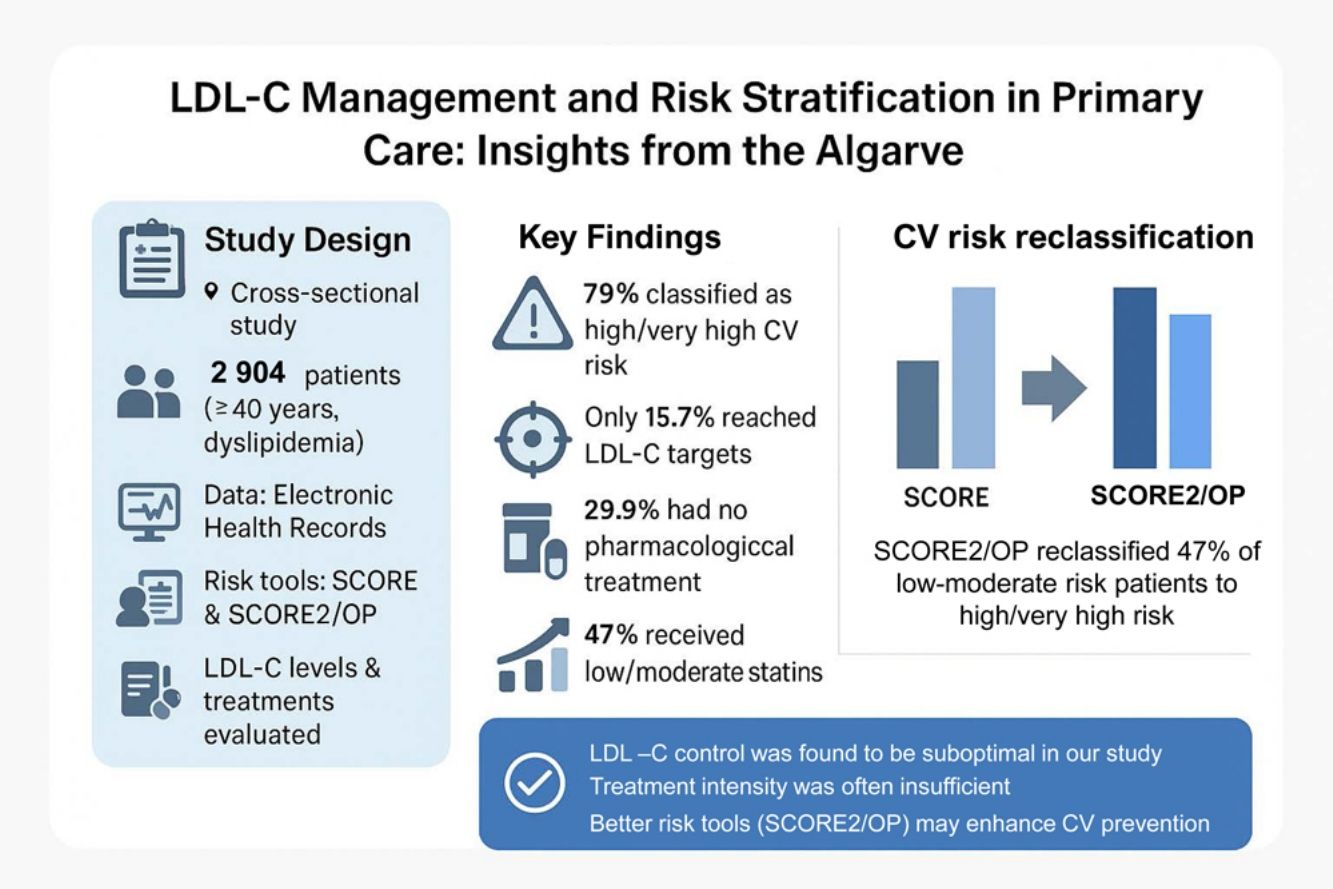
ResultsAmong 2904 patients (mean age 66.4 years; 54.5% female), 79% were classified as being high or very high risk. Only 15.7% achieved LDL-C targets. Among high/very high-risk patients, 88% were above recommended LDL-C thresholds. 29.9% of patients received no pharmacological treatment, and 47% were on low/moderate-intensity statins. High-intensity statins alone or in combination therapy were used in only 14.4% of cases.
ConclusionsLDL-C target achievement remains suboptimal in Portuguese primary care, particularly in high-risk patients. The underuse of intensive treatment highlights opportunities for improving CV prevention, especially through updated risk assessment tools like SCORE2/OP.
A doença cardiovascular (DCV) é a principal causa de mortalidade em Portugal. A dislipidemia, em particular a elevação do colesterol LDL (LDL-C), constitui um importante fator de risco modificável. As diretrizes da ESC/EAS recomendam metas de LDL-C ajustadas ao risco cardiovascular (RCV), mas persistem lacunas na sua implementação. Avaliar o controlo e tratamento do LDL-C em doentes com dislipidemia nos cuidados de saúde primários do Algarve, segundo as diretrizes ESC/EAS 2019/2021.
MétodosEstudo transversal baseado em registos eletrónicos de nove Unidades de Saúde Familiar. Foram incluídos adultos ≥40 anos com diagnóstico de dislipidemia (ICPC-2: T93). Avaliaram-se os níveis de LDL-C, terapêutica e RCV (SCORE2/OP).
ResultadosEntre os 2.904 doentes analisados (idade média 66,4 anos; 54,5% mulheres), 79% apresentavam RCV elevado ou muito elevado. Apenas 15,7% atingiram os objetivos de LDL-C, e 88% dos doentes de alto/muito alto risco encontravam-se acima do alvo. Cerca de 29,9% não recebiam terapêutica farmacológica e 47% estavam sob estatinas de baixa/moderada intensidade. Estatinas de alta intensidade ou terapêutica combinada foram usadas em apenas 14,4%.
ConclusõesO controlo do LDL-C permanece aquém do recomendado, sobretudo em doentes de alto risco. A adoção de estratégias terapêuticas mais intensivas e a utilização de modelos de risco atualizados, como o SCORE2/OP, poderão melhorar a prevenção cardiovascular nos cuidados primários.

Atherosclerotic cardiovascular disease (ASCVD) – which includes coronary heart disease, stroke, and peripheral arterial disease – remains the leading cause of morbidity and mortality in Europe.1–3 In Portugal, diseases of the circulatory system were the primary cause of death in 2021, accounting for 33452 deaths. Among these, ischemic heart disease and stroke were the most frequent causes, with 10660 and 9613 deaths, respectively.4 A 2016 study estimated that atherosclerosis was responsible for 14.3% of all deaths in mainland Portugal, contributing to 260943 disability-adjusted life years (DALYs), 75% of which were attributable to premature death (196438 years of life lost) and 25% due to disability (64505 years lived with disability).5
Atherosclerotic cardiovascular disease risk increases with age and is strongly associated with risk factors such as dyslipidemia, diabetes mellitus (DM), hypertension, smoking, physical inactivity, obesity, chronic kidney disease, and genetic predisposition. Managing these factors is essential both in people without established ASCVD (primary prevention) and in those with confirmed ASCVD (secondary prevention).2,3,6
Dyslipidemia, particularly elevated low-density lipoprotein cholesterol (LDL-C), is a key contributor to atherogenesis and a central target in cardiovascular prevention.7–9 The European Society of Cardiology (ESC) and the European Atherosclerosis Society (EAS) have defined LDL-C targets based on cardiovascular (CV) risk stratification, reinforcing the importance of personalized treatment approaches.2 According to current ESC/EAS guidelines, individuals at high and very high CV risk – such as those with ASCVD, DM, moderate to severe renal disease, or genetic lipid disorders – should aim for LDL-C levels below 70 mg/dL and 55 mg/dL, respectively.2,3 For individuals without established disease, CV risk should be assessed to guide treatment goals. Since 2003, the ESC has recommended the SCORE system to estimate 10-year risk of fatal CV events in adults aged 40–65. However, SCORE does not account for nonfatal events and may underestimate total CV risk. To address the limitations of the original SCORE model, the 2021 ESC guidelines introduced SCORE2 and SCORE2-OP, designed to estimate both fatal and nonfatal cardiovascular risk in individuals aged 40–69 and 70–89 years, respectively. Within this updated framework, Portugal is classified as a moderate-risk country.3,10 Corresponding LDL-C targets are stratified by cardiovascular risk: less than 100 mg/dL for moderate risk, less than 70 mg/dL for high risk, and less than 55 mg/dL for very high risk.2,3
In Portugal, cardiovascular risk assessment in primary care is supported by SClínico®, an electronic health record system developed by the Ministry of Health. Although the Directorate-General of Health recommends routine CV risk assessment,11 SClínico®, at the time of this study, still used the original SCORE model.
In 2007, data from Portuguese primary care settings estimated the prevalence of hypercholesterolemia (total cholesterol ≥200 mg/dL) at 47%, with 38.4% of individuals presenting LDL-C levels ≥130 mg/dL.12 In 2014, an estimation of hypercholesterolemia in the Portuguese population reported that 31.5% of adults aged 18–80 had LDL-C >160 mg/dL, and 51.5% had levels exceeding 130 mg/dL.13 Several studies have since demonstrated that the majority of high-risk patients do not achieve guideline-recommended LDL-C targets.14–18 Although these findings were based on the previous less stringent recommendations, and therefore cannot be directly extrapolated they nonetheless, suggest a persistent treatment gap. The European SANTORINI study reinforced this concern, showing that only 20.1% of patients met the LDL-C goals defined by the 2019 ESC/EAS guidelines.19,20 The Portuguese study LATINO reported LDL-C goal achievement in only 7% of high-risk and 3% of very high CV risk patients, respectively.21,22
Statins are the cornerstone of pharmacologic LDL-C reduction. Current guidelines recommend initiating statin therapy in individuals at high or very high CV risk for both primary and secondary prevention, titrating to the maximum tolerated dose to achieve target LDL-C levels.2,3
The efficacy of statins is well established in patients with clinical ASCVD, including those over 70 years of age. However, there is less direct evidence of statin benefit in older adults without clinical ASCVD. Initiation of statin treatment for primary prevention may be considered when at high risk or above, through an individualized approach. It is fundamental to consider not only patient cardiovascular risk, but also factors such as frailty, polypharmacy, multiple comorbidities, the potential for adverse effects, and the individual's life expectancy.2,3,23
In Portugal, lipid management is predominantly carried out by primary care. Given the significant clinical, economic, and humanistic burden of ASCVD, effective dyslipidemia control in this setting is essential.5 This study aimed to evaluate the achievement of LDL-C targets recommended by the 2019/2021 ESC/EAS guidelines in primary care patients from the Algarve region, as well as to assess their individual cardiovascular risk and corresponding pharmacological treatment.
ObjectivesThe primary objective of this study was to characterize the management of dyslipidemia in the primary care setting of the Algarve region by evaluating LDL-C levels – an established marker of atherogenic dyslipidemia – and documenting the corresponding treatment strategies, in alignment with the 2019/2021 ESC/EAS guidelines for cardiovascular disease prevention and lipid management.2,3 Although not a defined objective, we additionally analyzed the CV risk classifications, using both SCORE and SCORE2/OP models within the same patient population.
MethodsSamplingThe LANTERN study is a retrospective, cross-sectional study that included patients aged ≥40 years, using the electronic medical record data from the Portuguese Primary Care system. To identify the patients with the diagnosis of dyslipidemia, the ICPC-2 code for “Lipid disorder” – T93, was used. Data were collected from the medical records of nine Family Health Units (FHU) from the 3 sub-regions that compose the Algarve region (3 Family Health Units per region: Barlavento, Central and Sotavento), in December 2023.
The sampling was stratified, non-proportional for region, gender and age. The random sampling occurred at two levels: the FHU level from each sub-region and at the individual level in each FHU.
The minimum sample size was determined using the open-source statistical software OpenEpi. We assumed a confidence interval of 95% and a sampling error of 5%. Since the number of individuals with an ICPC-2 code T93 “Lipid disorder” registered in the Algarve Health Units (12/2023) was 96873,24 the minimum sample size needed, to estimate the appropriate population proportion with the required margin of error and confidence level for the Algarve was 383 individuals.
The study protocol was approved by the ULS Algarve ethics committee.
Data collectionData were obtained on sex, age, body mass index, smoking status, lipid profile (total cholesterol, high-density lipoprotein cholesterol [HDL-C], low-density lipoprotein cholesterol [LDL-C] and triglycerides), systolic blood pressure and the record of clinical conditions relevant for the CV risk assessment: diabetes mellitus type 2 (DM2; ICPC-2 codes: T89, T90), hypertension (ICPC-2 codes: K86, K87) and established ASCVD (i.e. acute myocardial infarction, acute coronary syndrome, coronary revascularization or other arterial revascularization procedures – ICPC-2 codes: K74, K75, K76; transient ischemic attack, stroke and atherosclerosis/peripheral vascular disease – ICPC-2 codes: K89, K90, K92). The lipid profile and the systolic blood pressure (BP) obtained were the latest values in the clinical file of each patient. The smoking status was determined as smoker or non-smoker at the point of data collection December 2023.
The body mass index was defined in four categories: <18.5 kg/m2 – underweight; 18–24.9 kg/m2 – normal; 25–29.9 kg/m2 – overweight and ≥30 kg/m2 – obese.
In this study, the 10-year fatal and nonfatal CVD risk, SCORE2/OP was individually calculated as described10 and used to obtain the CV risk. Patients in secondary prevention were directly assigned the corresponding CV risk.2,3
To compare the relationship between SCORE and SCORE2/OP, SCORE values were retrieved from each patient's clinical record using the SClínico® clinical support software and were used exclusively for this comparative analysis. Patients in secondary prevention were excluded, as cardiovascular risk estimation is not required in this group.
In our analysis we studied lipid profile, particularly LDL-C levels, the treatment strategy (no pharmacological treatment, treatment using statins and pharmacological treatment with other agents), with a focus on individual CV risk and LDL-C target achievement.
The programs used to obtain all the collected data were BI-CSP, SClínico® and MIM@UF®.
Statistical analysisThe participants were described taking into consideration the socio-demographic and clinical variables. The categorical variables were described by the absolute and relative frequencies in each category and compared using the χ2 or the Fisher test. The numerical variables were described using the mean, median, standard deviation and interquartile range (IQR). Comparisons used the t test, Mann–Whitney or Kruskal–Wallis, when applied. A p-value <0.05 was considered statistically significant. The statistical analysis was performed in IBM SPSS Statistics, version 29 and Jamovi Rcore team, version 2.3.
ResultsA total of 2904 patients were included in the study. The majority were female (54.5%) and the mean age was 66.4 years. Most patients were within the 40–69-year-old age group (58%; 95% CI=56–60%). The mean body mass index (BMI) was 27.6±4.9 kg/m2, with 71% of patients with dyslipidemia having a BMI >25 kg/m2 (Table 1, supplementary material). Current smokers represented 15.7% of the patients. Median LDL-C was 111.2 mg/dL, with an interquartile distance of 60.5 mg/dL. A high prevalence of hypertension (60.7%; 95% CI=58.5–63%) and type 2 diabetes mellitus (DM2) (25.2%; 95% CI=23.6–26.8%) was observed. The prevalence of atherosclerotic cardiovascular disease (ASCVD) among the patients with dyslipidemia was 18.2% (95% CI=16.8–19.6%). Statistically significant gender-based differences were observed across several variables (Table 1, supplementary material).
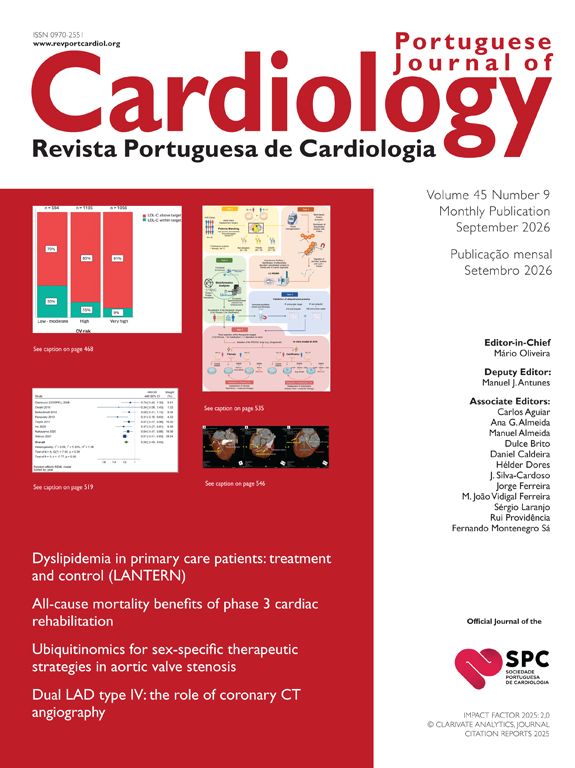
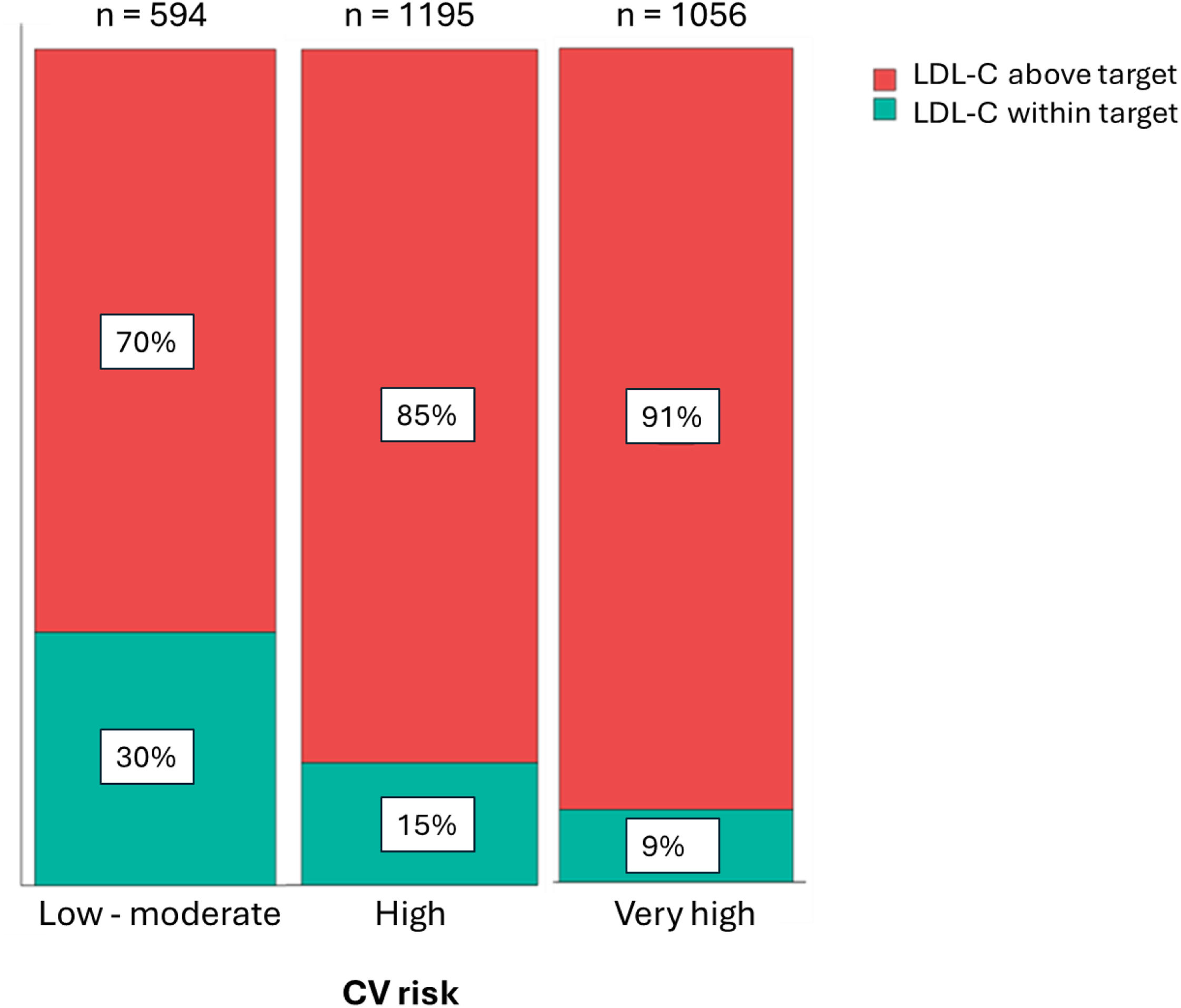
Overall, according to SCORE 2/OP, 42% of patients were classified as being high CV risk (95% CI=40–44.1%), followed by very high (37%; 95% CI=35.1–38.9%) and moderate-to-low risk (21%; 95% CI=19.5–22.6%). In our study, 15.7% (95% CI=14.3–17.2%) of patients with dyslipidemia achieved the LDL-C targets recommended by the latest ESC/EAS guidelines. Among those classified as high risk 85% had LDL-C levels above recommended thresholds, while in the very high risk category 91% were above the recommended goal (Figure 1). Therefore, among the high and very high-risk patients, 88% were above recommended LDL-C thresholds. Achievement rates differed significantly across CV risk categories (χ2 [2,n=2845]=135.591, p<0.001).

Distribution of patients with dyslipidemia, according to their CV risk and their goal LDL-C level achievement. Green: The individual LDL-C level was within the target range.2,3 Red: The individual LDL-C level was above the target range.
Regarding lipid-lowering therapy, 44.9% (95% CI=43–46.9%) of patients were receiving low or moderate-intensity statin monotherapy, while 29.9% (95% CI=28.2–31.6%) were not receiving any pharmacological treatment.
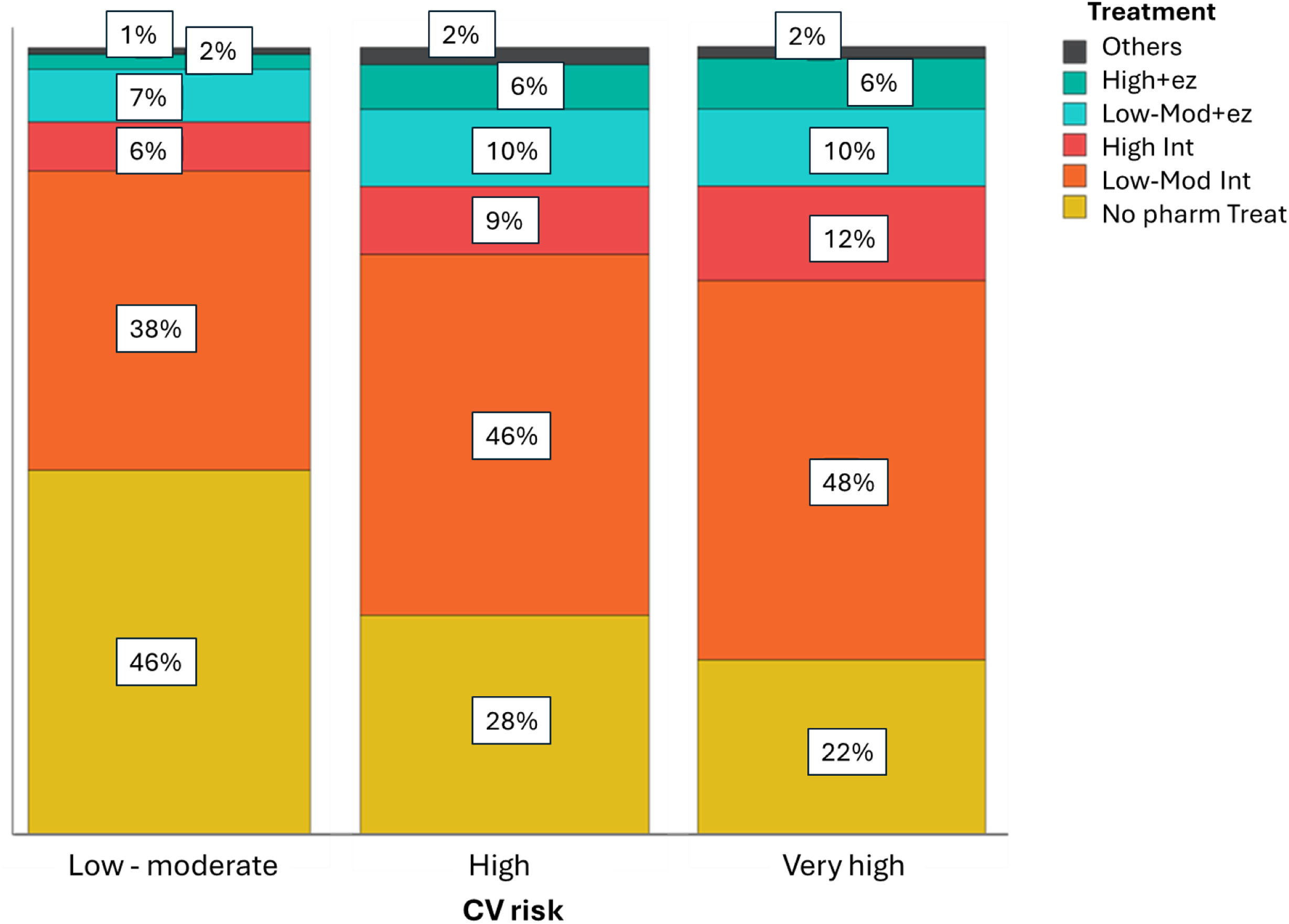
This treatment pattern remained consistent even among patients at high or very high risk. Among those classified as high risk 46% were receiving low or moderate-intensity statin monotherapy, while in the very high risk category this value was 48% (Figure 2).

Distribution of patients with dyslipidemia, according to their CV risk and their treatment strategy. No pharm Treat: without pharmacological treatment; Low-Mod. Int.: monotherapy with a statin of low or moderate intensity; High Int.: monotherapy with a statin of high intensity; Low-Mod+ez: double therapy with a statin of low or moderate intensity and ezetimibe; High+ez: double therapy with a statin of high intensity and ezetimibe; Others: fenofibrate, ezetimibe, supplements.
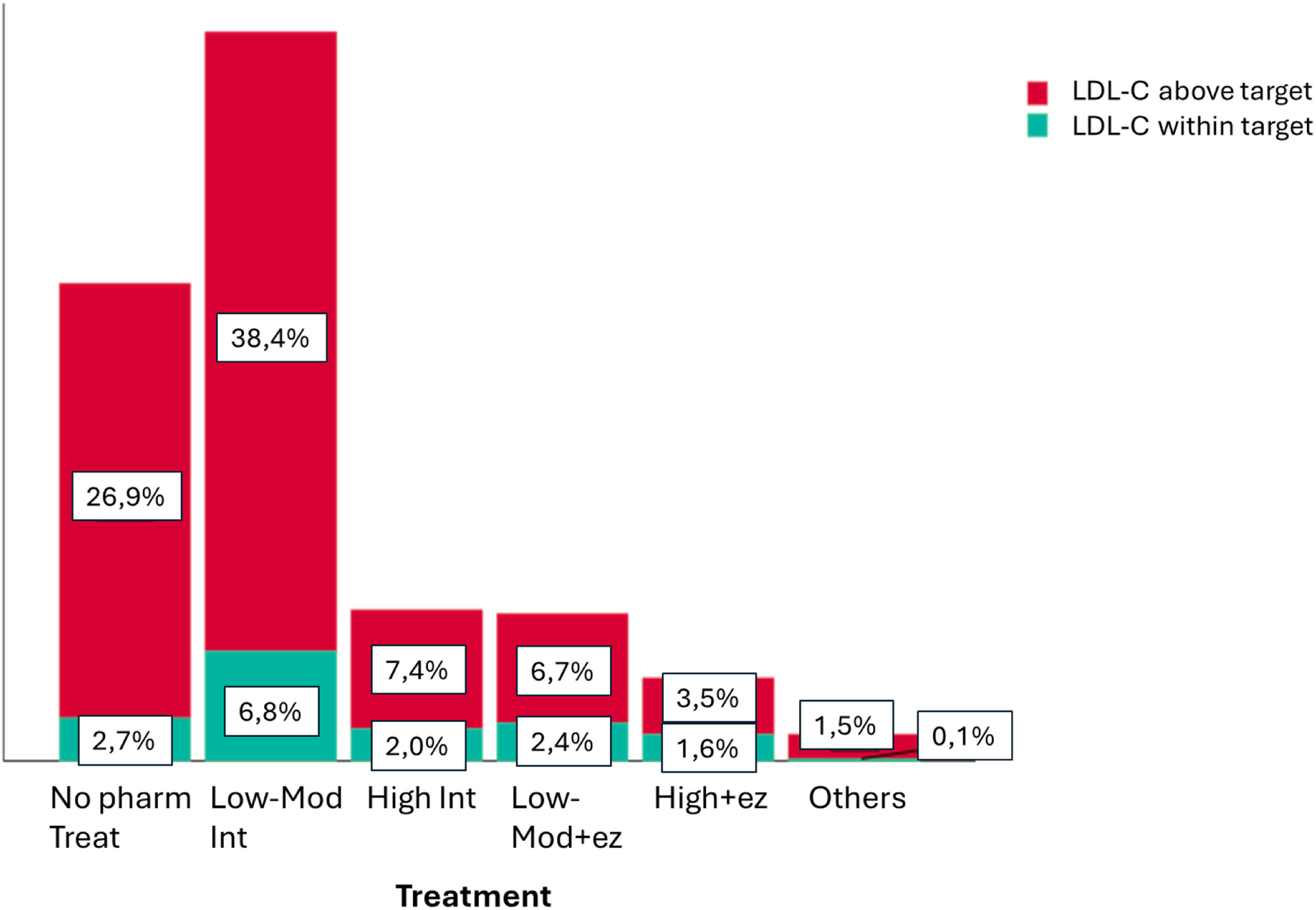
Among those treated with low/moderate-intensity statin monotherapy, 84.9% (95% CI=80.8–89%) had LDL-C above target. In patients with no pharmacological treatment, 91% (95% CI=85.4–96.6%) were above target. For patients on high-intensity statins, either alone or combined with ezetimibe, the proportion above target was 78.7% and 68%, respectively. However, these groups represented only 14.4% of the cohort, in contrast to 53.9% treated with low/moderate-intensity therapy (with or without ezetimibe), and 31.5% with no statin treatment. LDL-C target achievement differed significantly across treatment strategies (N [5,n=2251]=2866, p<0.001; Figure 3).

Distribution of patients with dyslipidemia according to their goal LDL-C level achievement and type of current treatment for the dyslipidaemia. No pharm Treat: without pharmacological treatment; Low-Mod. Int.: monotherapy with a statin of low or moderate intensity; High Int.: monotherapy with a statin of high intensity; Low-Mod+ez: double therapy with a statin of low or moderate intensity and ezetimibe; High+ez: double therapy with a statin of high intensity and ezetimibe; Others: fenofibrate, ezetimibe, supplements. Green: The individual LDL-C level was within the target range, as defined.2,3 Red: The individual LDL-C level was above the target range.
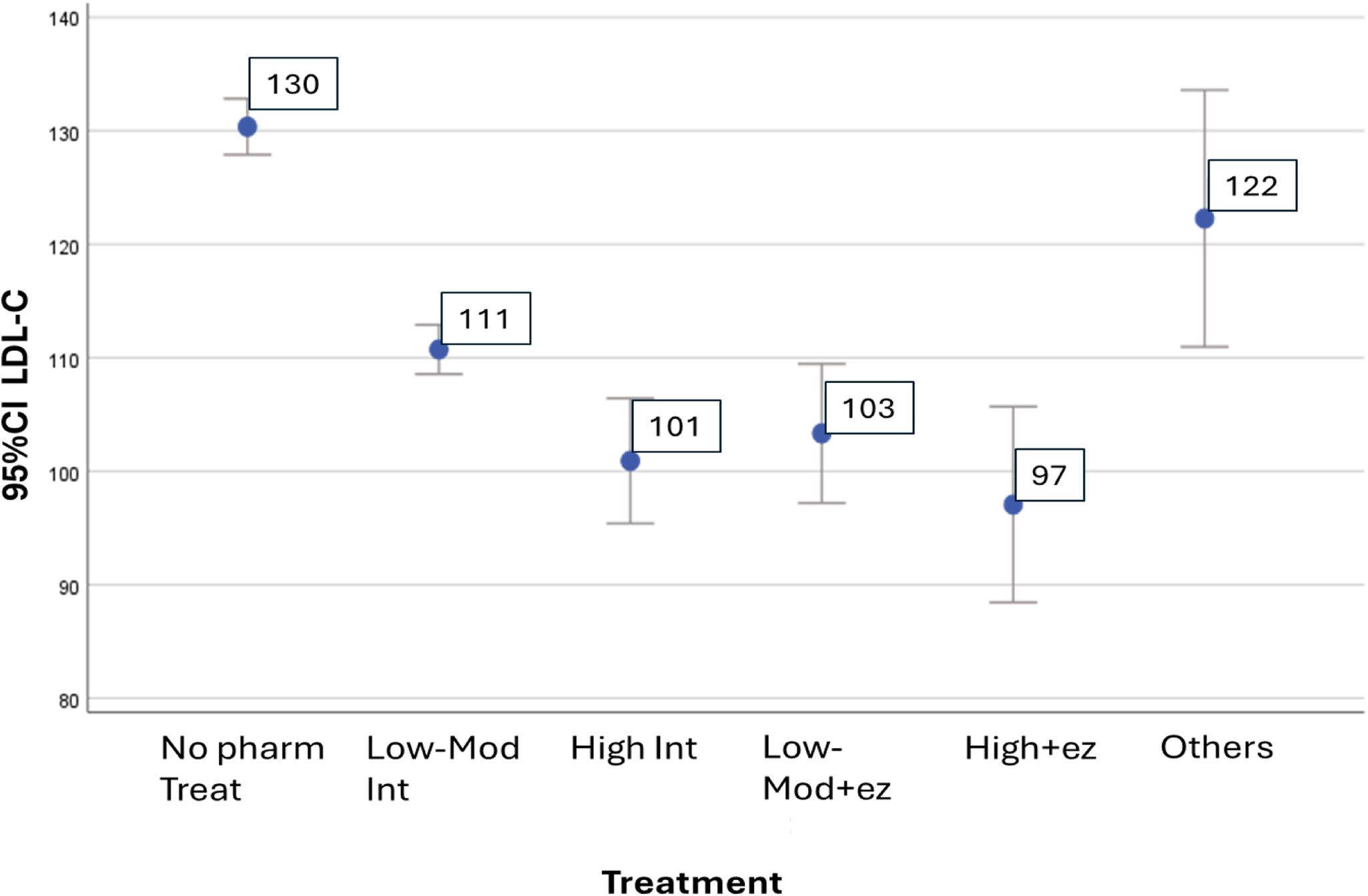
Mean LDL-C levels were highest among patients with no pharmacological treatment (130.3 mg/dL; 95% CI=127.8–132.9 mg/dL), followed by those receiving non-statin therapies (122.3 mg/dL; 95% CI=110.9–133.6 mg/dL). The lowest mean LDL-C level was observed in patients treated with high-intensity statin plus ezetimibe (97.1 mg/dL; 95% CI=88.4–132.9 mg/dL). Patients under low/moderate-intensity statin monotherapy had a mean LDL-C of 110.7 mg/dL (95% CI=108.5–112.9 mg/dL; Figure 4). These differences were statistically significant (H [5,n=2851]=254.621, p<0.001).

Mean LDL-C levels found in patients with dyslipidemia, with different management strategies. No pharm Treat: without pharmacological treatment; Low-Mod. Int.: monotherapy with a statin of low or moderate intensity; High Int.: monotherapy with a statin of high intensity; Low-Mod+ez: double therapy with a statin of low or moderate intensity and ezetimibe; High+ez: double therapy with a statin of high intensity and ezetimibe; Others: fenofibrate, ezetimibe, supplements.
Lastly, we compared cardiovascular risk classifications using the original SCORE algorithm and the updated SCORE2/OP system. Our results revealed that 54,4% of the patients were reclassified to a higher CV risk, 40,8% remained in the same CV risk range, while 4.5% were attributed to a lower CV risk group. Reclassifications were statistically significant (χ2 [6,n=1734]=536.566, p<0.001).
DiscussionThis study provides a comprehensive overview of lipid management in a large cohort of patients with dyslipidemia followed in primary care settings in the Algarve region, assessing the achievement of LDL-C targets.2,3 The recorded prevalence of dyslipidemia – defined as the proportion of individuals coded with T93 (ICPC-2) and registered with a family doctor – was 29.1% in the Algarve region and 32.2% at the national level.25 In this study, using the SCORE2/OP risk stratification, we found that 42% of the patients with dyslipidemia had high CV risk, 37% very high risk, and 21% low to moderate risk. We believe that our study shows higher values of high and very high CV risk, when compared with other studies from the Portuguese population, since our sample addresses patients diagnosed with dyslipidemia, including older adults (70 years-old and older), with other comorbidities, such as DM2 and CKD and those in secondary prevention (with confirmed ASCVD).
Our findings highlight a substantial gap between guideline-recommended targets and real-world lipid control, particularly in individuals at high and very high cardiovascular (CV) risk. Despite clear ESC/EAS recommendations,2,3 only 15.7% of patients in our study achieved LDL-C levels within target. Notably, 88% of individuals at high or very high CV risk remained uncontrolled, a figure that aligns with results from the SANTORINI study, which reported that 80% of high and very high-risk patients in Europe failed to achieve 2019 ESC/EAS guidelines.20 Similarly, the LATINO study reported LDL-C target attainment in only 7%, and 3% of the high and very high CV risk patients, respectively.21 Despite the poorly controlled dyslipidemia, 68.3% of the patients were under statin treatment, a higher percentage when compared to available literature.13
In this study, we found that approximately one-third of patients (29.9%) were not taking any lipid-lowering therapy (LLT), and nearly half were on low- or moderate-intensity statin monotherapy (44.9%) – a suboptimal approach for high-risk individuals.15,16,21 Among those receiving low/moderate-intensity statin monotherapy, 84.9% failed to meet LDL-C goals, reinforcing their limited efficacy in high-risk populations. High-intensity statins and combination therapy with ezetimibe – associated with lower mean LDL-C levels (97.1 mg/dL) – remained underutilized, representing only 14.4% of the dyslipidemia management. Despite the strong evidence supporting aggressive lipid-lowering therapy in patients with diabetes or established ASCVD,2,26,27 our data show that many of these high-risk individuals are inadequately treated. This underuse parallels findings from the LATINO and the SANTORINI study, which noted significant treatment inertia despite established benefit.20,21
Besides the safety profile of LLT, particularly statins, the long-term adherence to this treatment remains a constant barrier, being up to less than 50%.2 The cultural misconception regarding statins may also explain these values. Although many patients report adverse effects, mainly muscle-related symptoms, a systematic review of randomized placebo-controlled trials by Finegold et al.28 showed that only a small minority of symptoms reported on statins were genuinely caused by the drug.
The misperception of the CV risk may also result in therapeutic inertia. Besides the lack of a SCORE2/OP calculator in the Portuguese primary health program, at the time of the study, to accurately identify the CV risk, the suboptimal lipid control in the primary care setting may also be justified by the physician's overestimation of dyslipidemia good control, as studied by Pallarés-Carratalá et al.29 Additionally, patients may also underestimate their own CV risk, compromising the adherence to lifestyle habits and pharmacological treatment. All of the above factors result in a challenge during the decision-making of starting or intensifying LLT, due to the tolerability, patient's non-adherence or presence of other comorbidities, such as polypharmacy or frailty, particularly in older adults.
The introduction of the SCORE2/OP risk calculator marks an important shift in cardiovascular risk assessment, particularly in aging populations such as Portugal's. Our analysis showed significant reclassification into higher risk categories, consistent with other Portuguese validation studies,30-32 helping to correct previous underestimation, especially in older adults who benefit from statin therapy.33,34 This tool may support shared decision-making by enabling more accurate risk stratification, guiding LDL-C targets, and informing the choice of lipid-lowering therapy.
In our population, excess body weight/obesity was the most prevalent modifiable cardiovascular risk factor, particularly among women, in line with national trends.4,35 These sex-specific findings highlight the need for further analysis and targeted interventions to reduce cardiovascular risk and improve lipid management.35 The high burden of cardiometabolic comorbidities, consistent with previous Portuguese studies, further underscores the importance of integrated, multifactorial risk management in clinical practice.5,6,21
We consider that patient-focused strategies, including educational materials and shared decision-making tools, may help overcome resistance rooted in misperceptions of harm. To improve adherence to guidelines and patient outcomes, system-level interventions such as electronic health record alerts, audit and feedback mechanisms, and enhanced physician training are needed. From a public health perspective, these findings reinforce the need to enhance dyslipidemia management in Portuguese primary care settings. Strengthening the implementation of guideline-recommended treatment intensification algorithms, updating clinical support tools to include SCORE2/OP, and promoting the use of combination therapies are key strategies.36,37
This study has several limitations. As a retrospective analysis of electronic health records, it is subject to documentation variability and potential selection bias. The use of the most recent laboratory and clinical data may not reflect long-term control or adherence patterns. Additionally, the exclusion of certain variables (e.g., patient adherence, physician rationale for therapy choice) limits our ability to fully explore causal mechanisms. Nevertheless, the large, regionally representative sample and robust methodological design provide a meaningful snapshot of current practice in a real-world setting.
ConclusionThis study highlights a persistent clinical gap between guideline recommendations and real-world dyslipidemia management in the Algarve region. Our findings also demonstrate that this challenge persists despite updated guidelines and growing evidence of the benefits of aggressive LLT strategies in high-risk populations. Optimizing LDL-C control will require a multifaceted approach: broader use of high-intensity statins and combination therapy, better utilization of modern risk prediction tools like SCORE2/OP, and concerted efforts to address physician uncertainty and patient misperceptions. Bridging these gaps seems essential to reduce the burden of atherosclerotic cardiovascular disease in Portugal.
Conflicts of interestThe last author has served as a speaker for AstraZeneca, Boehringer Ingelheim, Faes Farma, and Novartis. The remaining authors have no conflicts of interest to declare.
The following are the supplementary data to this article: