Heart failure (HF) is a highly prevalent condition that contributes significantly to morbidity, mortality, and healthcare burden worldwide. In Portugal, the PORTHOS study estimated that 16.5% of adults aged 50 years and older have HF, underscoring the urgent need for earlier detection and optimized care pathways. N-terminal pro-B-type natriuretic peptide (NT-proBNP) has emerged as a key biomarker for HF screening, diagnosis, and prognosis. The recent reimbursement of NT-proBNP testing in Portuguese primary care represents a critical opportunity to enhance HF detection and management. This position paper provides evidence-based recommendations for clinical pathways following an elevated NT-proBNP result. We advocate for NT-proBNP measurement in individuals over 50 years old with diabetes, diuretic use, or symptoms such as fatigue, dyspnea, or congestion. Age-specific cut-off values are recommended: ≥125 pg/mL for ages 50–79 and ≥250 pg/mL for those aged 80 and older. Confirmatory testing using echocardiography and electrocardiography is essential for diagnosis and management planning. Ensuring smooth transitions between primary and secondary care is vital to improving outcomes. We highlight challenges in continuity of care and emphasize the importance of multidisciplinary collaboration, along with the adoption of digital tools to strengthen communication. Integrating NT-proBNP testing into routine practice will enable earlier diagnosis, timely intervention, and more efficient healthcare delivery. A coordinated approach that combines clinical best practices, public health strategies, and active patient engagement is essential to reducing HF-related morbidity and mortality.
A insuficiência cardíaca (IC) é uma condição altamente prevalente, que contribui significativamente para a morbilidade, mortalidade e a sobrecarga dos sistemas de saúde a nível mundial. Em Portugal, o estudo PORTHOS estimou que 16,5% dos adultos com idade igual ou superior a 50 anos apresentam IC, reforçando a necessidade urgente de deteção precoce e otimização dos percursos assistenciais. O N-terminal pro–B-type natriuretic peptide (NT-proBNP) emergiu como um biomarcador chave para o rastreio, diagnóstico e prognóstico da IC. O recente reembolso do teste de NT-proBNP nos cuidados de saúde primários em Portugal representa uma oportunidade crítica para reforçar a deteção e gestão da IC. Este artigo de posição apresenta recomendações baseadas na evidência para a orientação clínica após a deteção de níveis elevados de NT-proBNP. As nossas recomendações incluem a medição de NT-proBNP em indivíduos com mais de 50 anos com diabetes, a utilizar diuréticos ou que apresentam sintomas como fadiga, dispneia ou congestão. São recomendados valores de corte específicos em função da idade: ≥125 pg/mL para indivíduos com 50–79 anos e ≥250 pg/mL para indivíduos com 80 ou mais anos. A confirmação diagnóstica através de ecocardiograma e eletrocardiograma é essencial para estabelecer o diagnóstico e orientar o planeamento terapêutico. Consideramos vital garantir transições fluidas entre os cuidados de saúde primários e secundários, com o objetivo de melhorar os resultados clínicos. Salientamos também os desafios relacionados com a continuidade dos cuidados e enfatizamos a importância da colaboração multidisciplinar, bem como da adoção de ferramentas digitais para fortalecer a comunicação. A integração do teste de NT-proBNP na prática clínica de rotina poderá favorecer um diagnóstico mais precoce, uma intervenção atempada e uma prestação de cuidados de saúde mais eficiente. Uma abordagem coordenada que combine boas práticas clínicas, estratégias de saúde pública e o envolvimento ativo dos doentes é essencial para reduzir a morbilidade e mortalidade associadas à IC.
Heart failure (HF) is a highly prevalent condition that contributes significantly to morbidity and mortality globally, posing a significant challenge to national healthcare systems.1–3 In western European countries, the prevalence of HF ranges from 1% to 3% of the general population and escalates with age.2,4,5 In Portugal, the PORTHOS study highlighted the significant burden of HF, estimating that approximately 16.5% of adults aged 50 and older have the clinical syndrome.6 HF is currently the leading cause of hospital admission in adults aged over 65 years, accounting for 5% of deaths in the country.7,8 Furthermore, the prevalence is expected to continue rising (a 30% increase is predicted by 2030) alongside a significant financial burden on the healthcare system.8,9
Many patients followed in primary care (PC) are at increased risk of HF, especially individuals with diabetes mellitus (DM), arterial hypertension, obesity and other risk factors, who require regular monitoring to identify early signs of HF.10,11 Despite the availability of complementary tests, diagnosing HF in PC remains challenging due to the nonspecific nature of the signs and symptoms and the complexity in interpreting the results of the tests, leaving many patients without timely and appropriate care.12,13 Currently, N-terminal pro-B-type natriuretic peptide (NT-proBNP) and B-type natriuretic peptide (BNP) are considered biomarkers of choice for the screening and monitoring of HF. The determination of NT-proBNP/BNP blood levels is recommended by major international and national medical societies to aid in the diagnosis of HF, being recognized for its prognostic value and cost-effectiveness.5,14,15 Its use is particularly critical in PC, where access to high-quality echocardiography may be limited.12
In Portugal, the reimbursement of NT-proBNP and BNP testing when prescribed in PC, introduced in January 2025, has removed a significant barrier to access. This change represents a pivotal opportunity to enhance the early detection and management of HF. Furthermore, a recent budget impact study highlights the potential for significant cost savings for the Portuguese healthcare system through the use of NT-proBNP for HF diagnosis.16 Thus, to optimize the patient journey, it is essential to use NT-proBNP as a valuable tool to ensure timely diagnosis and appropriate treatment.
This manuscript aims to propose evidence-based recommendations to guide interventions in the clinical pathway of patients with suspected HF, after an elevated NT-proBNP/BNP test result. These recommendations align with good clinical practices and highlight the need for a multidisciplinary approach to improve outcomes and healthcare system efficiency.
Natriuretic peptides in HF: evidence and applicationThe role of NT-proBNP/BNP as a biomarker in heart failureNatriuretic peptides (NPs), including BNP and NT-proBNP, are circulating cardiac biomarkers that reflect myocardial stretch and biomechanical stress. Elevated levels of blood NPs can be early indicators of structural and functional cardiac changes, often associated with increased risk of developing HF.17,18
NT-proBNP/BNP testing is recommended as a first-line tool in patients with suspected HF.14,15,19 Its levels strongly correlate with ventricular wall tension, serving as a non-invasive indicator of cardiac dysfunction.20 NT-proBNP/BNP levels play a key role in supporting the diagnosis, determining prognosis, and monitoring treatment in HF.17 Moreover, NT-proBNP/BNP testing is particularly useful in reducing unnecessary echocardiography by ruling out HF in patients with levels below defined thresholds. A recent study showed that systematic measurement in suspected patients with HF would reduce unnecessary transthoracic echocardiograms (TTE) by at least 38.5%.21
Criteria for NT-proBNP/BNP testing in primary careThe European Society of Cardiology (ESC) recommends considering an HF diagnosis in the presence of suggestive signs and symptoms, such as congestion, fatigue, and dyspnea, especially when associated with risk factors including DM, hypertension, obesity, chronic kidney disease, history of acute myocardial infarction, coronary artery disease, alcohol abuse, cardiotoxic chemotherapy, or a family history of cardiomyopathy or sudden death.5
Diagnosing HF in PC is particularly challenging in the early stages of the disease, as symptoms are often non-specific, and patients may be paucisymptomatic. In the PORTHOS study, using NT-proBNP as a screening tool, rather than relying on symptoms, enabled the identification of many patients in the early HF stages, who were previously unaware of their condition, underscoring its value in early diagnosis.6
Current national and international guidelines recommend NT-proBNP/BNP testing for all individuals aged 50 years and older with diabetes, regardless of symptoms, based on strong evidence of a high prevalence of HF in this at-risk population.19,22,23 The American Diabetes Association (ADA) and the American Heart Association (AHA) jointly advocate regular screening for HF in patients with diabetes.19 Similarly, the ESC has endorsed this approach, and a recent consensus report from the Portuguese Society of Endocrinology, Diabetes, and Metabolism, the Portuguese Society of Cardiology, the Study Group on Diabetes Mellitus of the Portuguese Society of Internal Medicine, and the Portuguese Association of General and Family Medicine aligns with these recommendations in Portugal.24,25
Despite the established use of NT-proBNP/BNP testing in patients with DM, no defined strategies exist for early HF detection in other high-risk groups, such as those with arterial hypertension. At present, recommendations for HF screening in at-risk individuals rely primarily on expert opinion, highlighting the need for randomized evidence to extend the current guidelines, applied to patients with DM, to other high-risk populations.
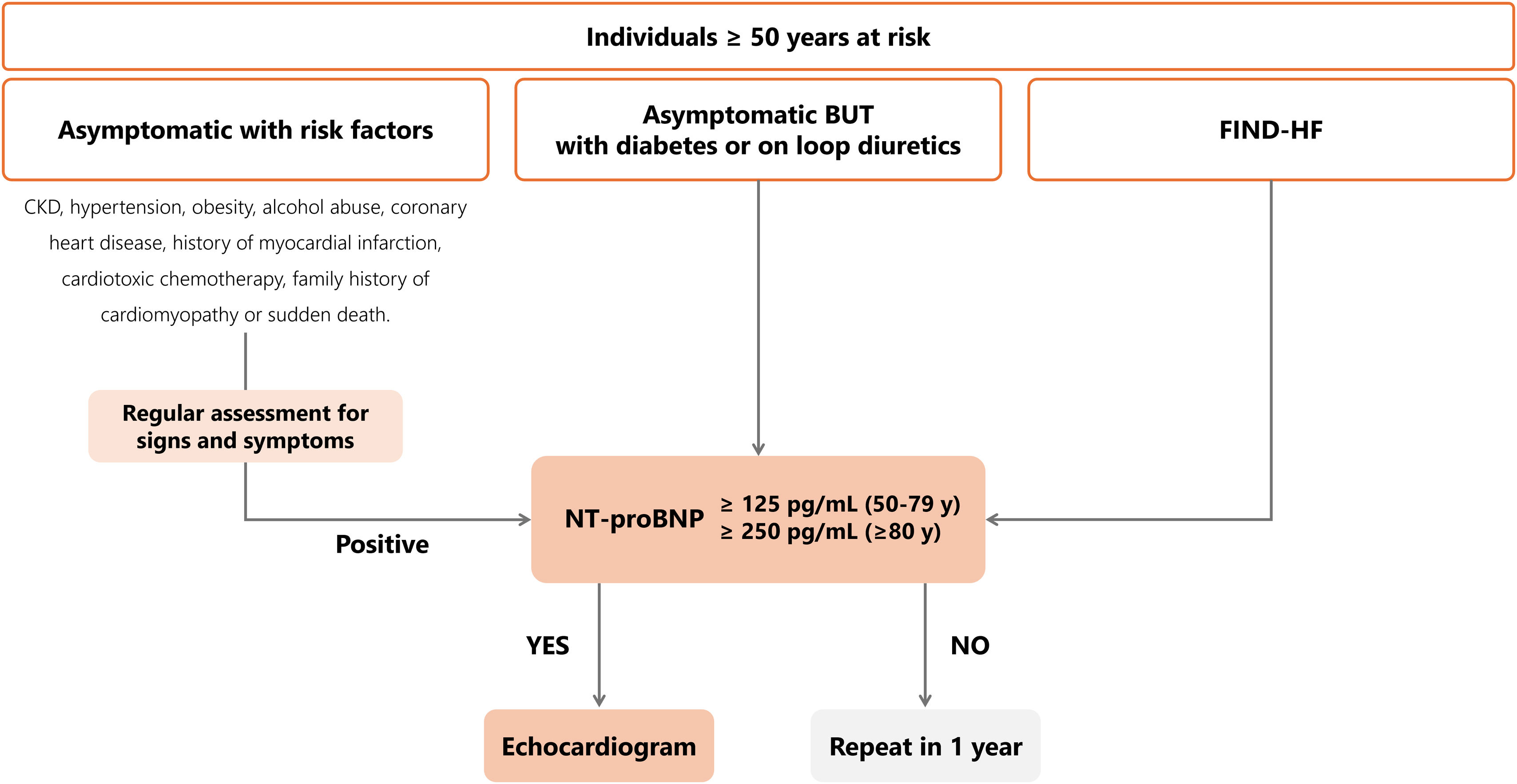
In this context, our recommendations for individuals aged ≥50 years at risk are: (1) regular assessment for signs and symptoms in those who are asymptomatic but have HF risk factors, followed by measurement of NT-proBNP/BNP levels if signs/symptoms develop; (2) direct measurement of NT-proBNP/BNP levels in individuals who are asymptomatic but have diabetes or are receiving loop diuretics; and (3) direct measurement of NT-proBNP/BNP levels in cases of high clinical suspicion of HF, using the FIND-HF acronym (Fatigue, Increased water accumulation, Natriuretic peptide testing, Dyspnea)15 (Figure 1). The recommended NT-proBNP rule-in cut-off points depend on age, but a lower threshold should be considered in cases of high clinical suspicion or diagnostic uncertainty.
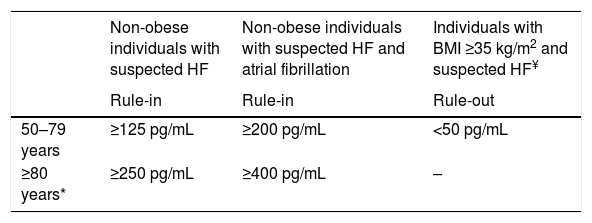
Criteria for heart failure rule-in/rule-out in primary care (NT-proBNP)
The definition of NT-proBNP/BNP cut-off values has been a subject of ongoing discussion in the field. A consensus statement from the Heart Failure Association of the ESC proposed thresholds adjusted for sex, age, and the presence of risk factors,15 helping to contextualize these values in clinical practice and enabling a more tailored approach. In Portugal, a screening calculator (https://www.calculadorantprobnp.pt/) has been developed to support clinical decision-making, based on age, sex, and comorbidities, specifically for patients with DM.25
Although multiparametric cut-offs improve diagnostic sensitivity, their complexity may hinder clinical decision-making and reduce practicality in PC settings. Diagnostic strategies require a balance between sensitivity and specificity to minimize false positives, avoid unnecessary complementary tests, and contain associated costs. For simplicity, we recommend a rule-in cut-off of ≥125 pg/mL for non-obese individuals aged 50–79 years, regardless of sex (Figure 1 and Table 1). For non-obese patients aged 80 years or older, a rule-in cut-off of ≥250 pg/mL is recommended (Figure 1 and Table 1). However, in cases of diagnostic uncertainty, the cut-off of ≥125 pg/mL is recommended to avoid missing cases (Table 1), especially in light of findings from the PORTHOS study, which showed that 90% of patients with HF remained undiagnosed prior to NT-proBNP testing.6 These rule-in cut-off values prioritize test sensitivity, represent the lower diagnostic thresholds, and encompass the gray diagnostic zone(s). Regarding guidelines adjusted for specific comorbidities, we recommend using distinct cut-off values in the case of atrial fibrillation, as this is already a common practice (Table 1). Additionally, because NT-proBNP rule-in concentrations may be reduced in conditions such as obesity, a rule-out cut-off of <50 pg/mL is recommended for patients aged under 80 years with a body mass index (BMI) ≥35 kg/m2 (Table 1).26 It is important to note that NT-proBNP levels may also appear reduced in patients who are overweight or have grade I obesity (BMI 25–34.9 kg/m2). Therefore, although the ≥125 pg/mL cut-off serves as a general reference, HF should not be categorically excluded in patients with values in the intermediate range (i.e., 50–124 pg/mL). In such cases, the decision to proceed with echocardiographic evaluation should be guided by a high level of clinical suspicion. This targeted approach ensures diagnostic precision while avoiding unnecessarily complex workflows. For patients with DM, the authors endorse the use of the screening calculator developed by Neves et al. (https://www.calculadorantprobnp.pt/).25
Recommended NT-proBNP cut-off values in suspected HF stratified by age, atrial fibrillation status, and obesity (BMI ≥35 kg/m2).
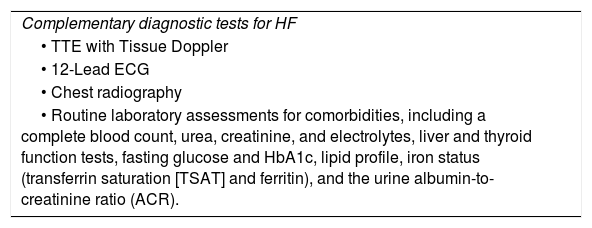
Following an abnormal NT-proBNP/BNP result, we recommend performing complementary diagnostic tests in patients with suspected HF (Table 2), in line with the 2021 ESC guidelines.5 TTE with Tissue Doppler is essential for confirming a HF diagnosis by assessing cardiac structure and function, and for measuring left ventricular ejection fraction (LVEF) to determine the HF phenotype.5,27 An electrocardiogram (ECG) is also necessary and may reveal abnormalities such as atrial fibrillation or signs of a previous myocardial infarction. Conversely, a normal ECG makes a diagnosis of HF unlikely.28 Chest radiography should be requested to support the diagnosis, as it provides valuable information (e.g., pulmonary congestion or cardiomegaly) and offers a favorable cost-benefit ratio. It should also be used in patients presenting with dyspnea and/or fatigue to help identify alternative causes for symptoms (e.g., pulmonary disease).5
Recommended complementary diagnostic tests to NT-proBNP/BNP for all patients with suspected HF.
| Complementary diagnostic tests for HF |
| • TTE with Tissue Doppler |
| • 12-Lead ECG |
| • Chest radiography |
| • Routine laboratory assessments for comorbidities, including a complete blood count, urea, creatinine, and electrolytes, liver and thyroid function tests, fasting glucose and HbA1c, lipid profile, iron status (transferrin saturation [TSAT] and ferritin), and the urine albumin-to-creatinine ratio (ACR). |
If suspicion of HF remains after these initial procedures, the patient should be referred to a cardiovascular specialist in a secondary care setting for further evaluation and management. A cardiologist or HF expert will not only confirm or exclude HF and other possible conditions, but will also prioritize the optimization of risk factors and comorbidity management, assess the patient's prognosis, and explore advanced therapeutic options as appropriate.29
Criteria for referral to secondary careIn cases of suspected HF in PC, specific criteria should be followed to guide the decision to refer patients to secondary care. In cases where referral to secondary care is indicated, treatment should still be initiated promptly in PC to relieve symptoms and improve clinical outcomes. We recommend referring the following patients to secondary care:
- •
Patients with HF with reduced ejection fraction (HFrEF);
- •
Patients with mildly reduced EF (HFmrEF);
- •
Patients with HF with preserved ejection fraction (HFpEF) who experience frequent worsening episodes, have persistent congestion, or present with comorbidities that limit effective management in PC, such as advanced chronic kidney disease (CKD);
- •
Patients with HF with specific etiologies (e.g., amyloidosis) or comorbidities (e.g., advanced CKD, uncontrolled arrhythmias, atrial fibrillation ablation candidates) or with frequent episodes of HF decompensation.
We recommend that the following patients continue to be followed in PC:
- •
Stable patients with HF with EF >40% and no issues with congestion control, complex arrhythmias, indications for cardiac devices or interventions, ablation treatments, or advanced CKD.30 However, if their condition worsens or specific diagnostic/therapeutic needs emerge, referral to secondary care is recommended;
- •
Patients with HFpEF who have a clearly identified etiology and show good therapeutic response.
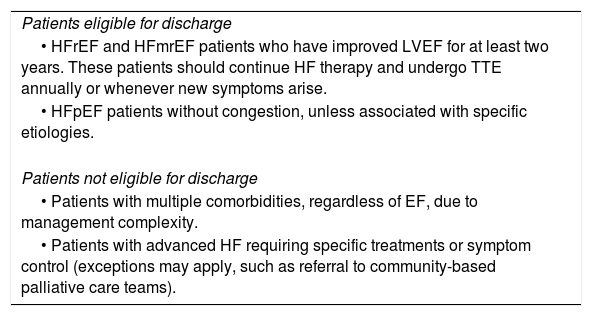
Following patient management in secondary care – which is beyond the scope of this manuscript – it is crucial to define the necessary steps for transitioning patients with HF back into PC. Patients meeting specific criteria are eligible for discharge and can receive care in PC, while those not meeting these criteria require continued specialized care (Table 3). Effective follow-up in PC is essential to ensure continuity of care, monitor the patient's clinical status, and prevent disease progression.
Criteria for patient discharge from hospital to primary care.
| Patients eligible for discharge |
| • HFrEF and HFmrEF patients who have improved LVEF for at least two years. These patients should continue HF therapy and undergo TTE annually or whenever new symptoms arise. |
| • HFpEF patients without congestion, unless associated with specific etiologies. |
| Patients not eligible for discharge |
| • Patients with multiple comorbidities, regardless of EF, due to management complexity. |
| • Patients with advanced HF requiring specific treatments or symptom control (exceptions may apply, such as referral to community-based palliative care teams). |
For discharged patients, when their clinical responsibility shifts exclusively to PC, detailed discharge notes are essential to ensure continuity of care and optimal management.31 These notes should include:
- •
HF diagnosis, including type and stage;
- •
Goals for disease control and comorbidity management;
- •
Diuretic strategy guidance;
- •
Recommended frequency for blood tests, TTE, and other exams;
- •
Criteria for hospital re-referral, specifying warning signs.
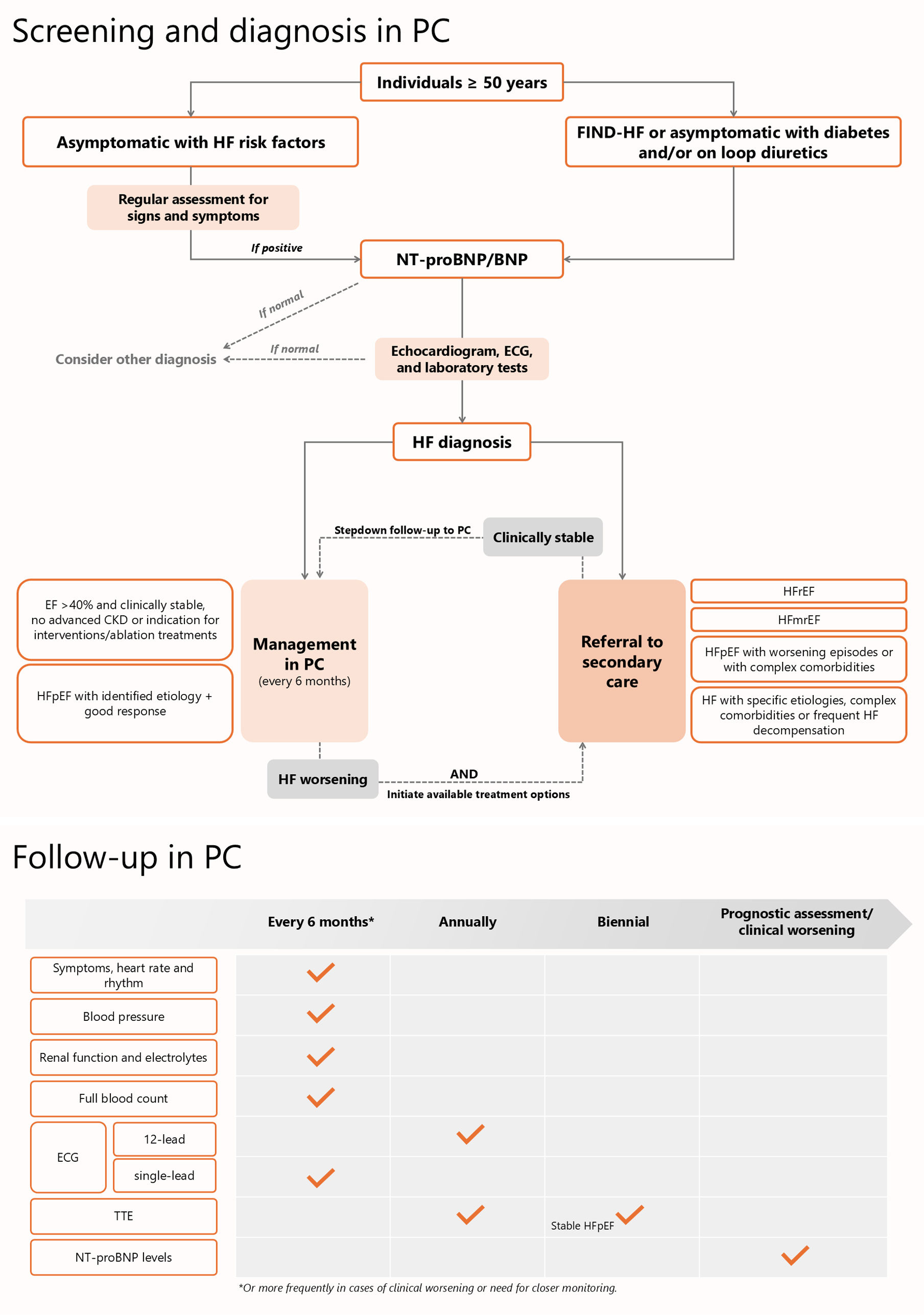
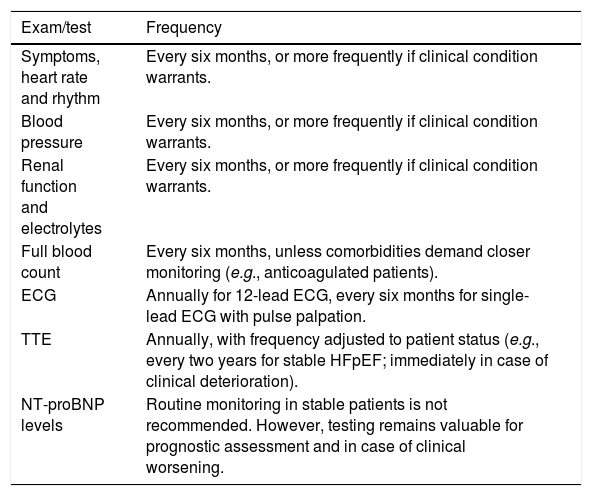
According to the ESC guidelines, patients with HF should be followed up at intervals of no longer than six months, unless clinical conditions justify more frequent follow-ups or if any new signs/symptoms occur.5 We endorse this biannual schedule to check symptoms, heart rate and rhythm, blood pressure, full blood count, electrolytes, and renal function (Table 4). These recommendations should be cautiously applied and adapted to individual patient conditions and clinical contexts.
Recommended frequency of monitoring exams/tests in patients with HF.
| Exam/test | Frequency |
|---|---|
| Symptoms, heart rate and rhythm | Every six months, or more frequently if clinical condition warrants. |
| Blood pressure | Every six months, or more frequently if clinical condition warrants. |
| Renal function and electrolytes | Every six months, or more frequently if clinical condition warrants. |
| Full blood count | Every six months, unless comorbidities demand closer monitoring (e.g., anticoagulated patients). |
| ECG | Annually for 12-lead ECG, every six months for single-lead ECG with pulse palpation. |
| TTE | Annually, with frequency adjusted to patient status (e.g., every two years for stable HFpEF; immediately in case of clinical deterioration). |
| NT-proBNP levels | Routine monitoring in stable patients is not recommended. However, testing remains valuable for prognostic assessment and in case of clinical worsening. |
In addition to the care provided by PC physicians, patient self-care and self-management interventions play an important role in effectively managing HF. Encouraging patients to monitor their symptoms and engage in self-management can facilitate the early detection and timely reporting of worsening signs and symptoms to healthcare providers. Initiatives, including teaching pulse palpation, may help detect heart rate irregularities, such as atrial fibrillation – a significant HF risk factor and comorbidity.5,32
Challenges in continuity of careContinuity of care is a critical component in managing HF, especially as patients transition between primary and secondary care. Ensuring a smooth handover and maintaining a consistent management approach across care settings is essential to avoid disruptions that could negatively impact clinical outcomes. However, substantial challenges remain in achieving effective communication and coordination among healthcare providers across different levels of the system.
To promote consistent and high-quality management of patients with HF in PC, there is an urgent need to develop standardized indicators. Reducing reliance on individual physician judgment will help ensure more equitable and effective care. Moreover, there is currently no structured communication between PC physicians and hospital-based cardiologists or internists. Efficient communication channels (e.g., phone, e-mail, teleconsultation, or digital self-monitoring tools) are urgently needed to address patient issues, post-discharge or pre-referral.
The most challenging cases involve patients discharged without adequate follow-up, often due to systemic inefficiencies such as insufficient human resources or logistical barriers that delay secondary care consultations. In these situations, PC physicians become the primary providers of ongoing management, underscoring the importance of clear guidelines on appropriate therapeutic management tailored to primary care, enabling patients to initiate treatment promptly while awaiting specialist consultation.
An integrated healthcare system with seamless coordination between primary and secondary care, supported by effective communication, could address these challenges more efficiently. Ensuring smooth patient transitions, while maintaining access to HF-specific consultations, would safeguard continuity of care and minimize risks. The development of targeted digital tools could further enhance communication among institutions involved in the management of patients with HF.
ConclusionConsidering the alarming prevalence of HF, this manuscript highlights the urgent need for coordinated strategies to optimize HF diagnosis, referral, and follow-up within Portuguese PC, providing evidence-based recommendations to guide clinical decision-making (Figure 2). HF remains under-addressed partly because it is not included among contractual indicators, unlike hypertension, diabetes, chronic obstructive pulmonary disease, family planning, maternal health, and pediatric care. Incorporating HF into these indicators would be a critical step toward improving patient follow-up. Alternatively, the indicators could be redesigned to prioritize a truly holistic and patient-centered approach. In addition, NT-proBNP/BNP screening in broader at-risk populations beyond individuals with diabetes may offer value, pending further supporting evidence.

In summary, a joint effort involving healthcare professionals, public policies, and active patient engagement is key to improving HF diagnosis and management. This approach would not only reduce the disease's impact on citizens but also alleviate the burden on the Portuguese healthcare system.
FundingFunding was provided by Roche Diagnostics Portugal.
Conflicts of interestCG has received speaker and consultant fees from AstraZeneca, Bayer, Boehringer-Ingelheim, Daiichi-Sankyo, GSK, Medtronic, Novartis, Novo Nordisk, Roche Diagnostics and Servier. EM has received speaker and consultant fees from AstraZeneca, Bial, Amicus Therapeutics, Sanofi, Amgen, Pfizer, and Roche Diagnostics. IM received speaker and consultant fees from AstraZeneca, Bayer, Bial, CSL Vifor, Daiichi-Sankyo, Novartis, Novo Nordisk, Pfizer, Roche Diagnostics, and Servier. JP has received speaker/consultant fees from AstraZeneca, Bayer, Bial, Boehringer Ingelheim/Lilly, Daiichi-Sankyo, GSK, Novartis, Pfizer, Roche Diagnostics, Servier, Vifor Pharma. JS and MJR have no conflicts of interest to declare.
The authors would like to thank Ana Ferreira and Ana Freire (W4Research) for writing support during the preparation of this manuscript.